

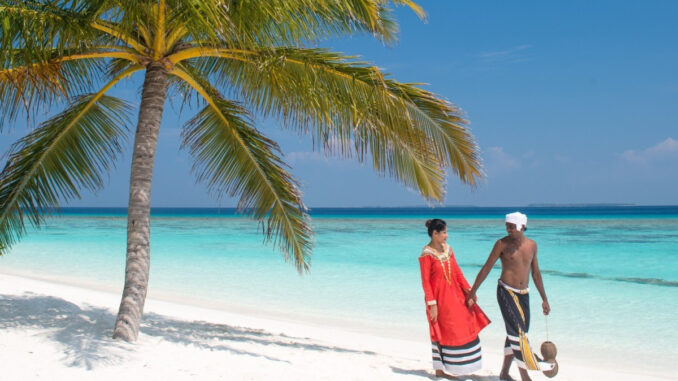
As geopolitical tensions and fast-paced urban pressures continue to shape daily life across the Middle East, a growing number of residents are turning their attention southward to the Maldives, increasingly viewed not just as a luxury vacation destination but as a reliable sanctuary for peace, recovery, and even long-term living.
Traditionally known for its turquoise waters, overwater villas, and exclusive resorts, the Maldives is undergoing a subtle transformation in perception. What was once considered a short-term indulgence for honeymooners and high-end travelers is now being reimagined as a practical refuge for individuals and families seeking distance from regional instability and mental fatigue.
Travel agencies and property consultants report a steady rise in inquiries from Gulf-based residents exploring extended stays, private island rentals, and even property investment opportunities. The appeal lies not only in the country’s natural beauty but also in its relative political stability, low population density, and slow-paced lifestyle—factors that sharply contrast with the high-pressure environments of major Middle Eastern cities.
Industry insiders note that remote work trends have further accelerated this shift. With more professionals no longer tied to physical offices, the Maldives presents a compelling alternative: a place where work can continue uninterrupted against a backdrop of calm seas and minimal distractions. Internet infrastructure improvements in select islands and resorts have also made longer stays more viable than in the past.
Health and wellness play a central role in this growing migration pattern. Visitors often cite the psychological benefits of isolation, clean air, and ocean-based living as key motivations. In a region where stress levels can be heightened by economic uncertainty and political developments, the Maldives offers a rare sense of detachment and reset.
Local authorities have quietly supported this trend by facilitating longer tourist stays and promoting sustainable tourism initiatives that balance economic growth with environmental preservation. While foreign ownership of land remains restricted, long-term lease options and residency-linked investment programs are attracting serious interest from affluent individuals seeking a semi-permanent base.
However, experts caution that the Maldives is not without its challenges. The cost of living remains high, especially in resort areas, and access to healthcare and education outside the capital can be limited. Seasonal weather patterns and climate vulnerability also remain considerations for those contemplating a permanent move.
Despite these factors, the emotional pull of the Maldives continues to grow stronger. For many in the Middle East, it represents more than just a getaway—it is becoming a symbol of stability, privacy, and personal well-being in uncertain times.
As global mobility evolves and priorities shift toward quality of life, the Maldives is steadily carving out a new identity: not just as a destination, but as a peaceful alternative home for those seeking calm beyond the region’s complexities.