

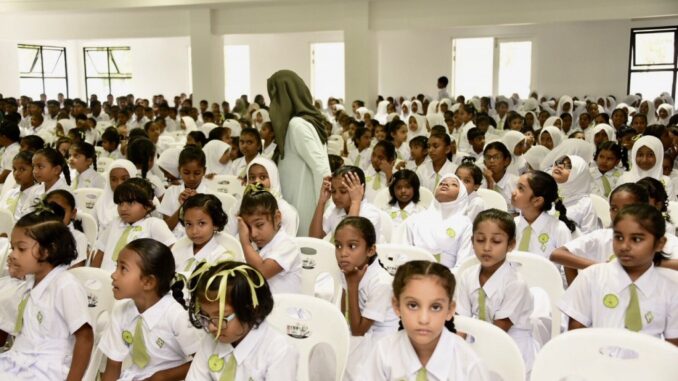
The Maldives, a nation better known globally for its pristine beaches and luxury tourism, has quietly established one of the most disciplined and education-focused societies in South Asia. Rooted in policies shaped during the period of the British colonial rule in the Maldives, the country adopted an English-medium education system that continues to define its academic framework today.
This legacy is reflected in the widespread use of internationally recognized qualifications such as the O Level and A Level examinations. These benchmarks have become the standard measurement of academic progress across the island nation, aligning Maldivian students with global education systems and opening pathways to universities worldwide.
Over the past two decades, the Maldives has achieved a remarkable milestone: zero illiteracy. This accomplishment is not accidental but the result of deliberate national policy and a deeply ingrained cultural emphasis on learning. Education is not treated as optional or secondary; it is viewed as a fundamental pillar of life and a shared responsibility between the state and families.
The government has reinforced this priority through strict enforcement of compulsory schooling. Parents who fail to send their children to school can face serious legal consequences, underscoring how critical education is within Maldivian society. In this context, neglecting a child’s education is not merely a personal choice but a punishable offense, reflecting a broader national commitment to human development.
Equally significant is the country’s policy of providing free education. From primary through secondary levels, students have access to schooling without financial barriers, ensuring that geography and income do not prevent participation. In a nation spread across hundreds of islands, this commitment requires extensive logistical coordination, yet it remains a cornerstone of public policy.
Education in the Maldives extends beyond literacy and academic achievement. It is seen as a pathway to social stability, economic opportunity, and national resilience. By investing heavily in its youth and enforcing strict attendance laws, the country has cultivated a population that values knowledge and discipline.
Today, the Maldives stands as an example of how consistent policy, cultural emphasis, and international standards can transform a small island nation into a highly literate society. While challenges remain, particularly in access to higher education and specialized training, the foundation built over the past decades continues to shape a generation that is globally competitive and locally grounded.
In an era where many countries struggle with educational inequality, the Maldivian model highlights the impact of treating education not just as a service, but as a national obligation and a defining social value.