

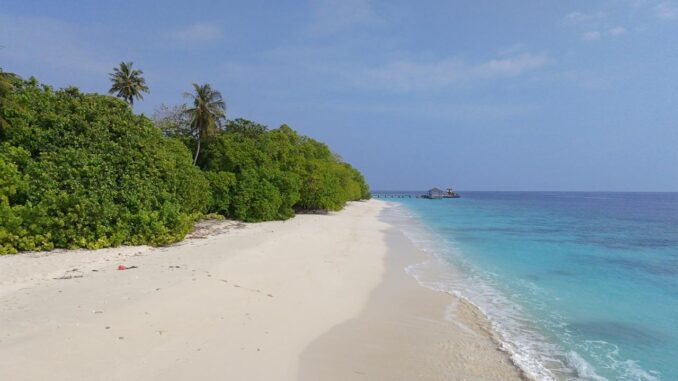
In the Maldivian context, a City Hotel refers to a hospitality establishment that typically has more than 50 beds and operates as a hybrid concept between a resort and a guesthouse.
Unlike traditional guesthouses, a city hotel offers full hotel services and facilities, and unlike private island resorts, it is developed on an inhabited (local) island. In this sense, a city hotel in the Maldives is comparable to luxury or upscale hotels found in major cities and touristic centers in other countries.
Location & Concept
In the Maldives, city hotels are developed on inhabited islands where:
-
Commercial and social activities are present
-
Transportation access is convenient (airport, ferry, speedboat)
-
Guests can experience local culture alongside tourism services
These hotels rely not on isolated island luxury, but on proximity to urban life, services, and activities, while still offering comfort, quality, and curated experiences.
Key Characteristics of a Maldivian City Hotel
-
Located on inhabited islands
-
Typically 50 beds or more
-
Mid-scale to luxury positioning
-
Offers structured hotel facilities similar to resorts
-
Serves leisure, business, transit, and experiential travelers
-
Operates within local island regulations
Revenue (Sales) Components of a City Hotel
The core sales and revenue streams of a city hotel may include:
-
Accommodation Sales
-
Room revenue (short stays, transit guests, business travelers)
-
-
Food & Beverage (Restaurant)
-
In-house dining
-
External guests (where permitted)
-
-
Spa & Wellness Services
-
Massage, wellness treatments, relaxation facilities
-
-
Excursions & Experiences
-
Island hopping
-
Sandbank visits
-
Cultural tours
-
-
Water Sports Activities
-
Jet ski, kayaking, snorkeling, etc.
-
Usually outsourced to licensed operators
-
-
Diving Services
-
Scuba diving, courses, guided dives
-
Commonly outsourced to professional dive centers
-
Outsourcing Model
In most city hotel operations:
-
Water sports, diving, and excursions are outsourced to licensed third-party providers
-
The hotel earns revenue through:
-
Commission-based agreements
-
Package pricing
-
Strategic partnerships
-
This reduces capital expenditure and operational risk while expanding the guest experience offering.
Investment Size & Return on City Hotels in the Maldives
Investment in a City Hotel in the Maldives varies depending on the scale, design, and positioning determined by the investor. Typically, capital investment ranges between USD 1 million to USD 5 million, making city hotels an accessible entry point into the Maldivian tourism sector compared to private island resorts.
Return on Investment (ROI)
City hotels offer a quicker and more predictable return on investment, with an average ROI period of 5 to 8 years, depending on:
-
Location (Malé, Hulhumalé, Addu, or other urban islands)
-
Room count and facilities
-
Operational efficiency
-
Sales and distribution strategy
Compared to resort developments, city hotels benefit from:
-
Lower development costs
-
Shorter construction timelines
-
Stable year-round demand
Revenue Model Beyond Accommodation
In the Maldives, hotels in the tourism industry do not rely solely on accommodation revenue. Successful city hotels generate income from multiple complementary revenue streams, which significantly accelerate ROI.
Key income-generating areas include:
-
Accommodation Sales
-
Food & Beverage (Restaurants & Cafés)
-
Spa & Wellness Services
-
Excursions and Experiences
-
Water Sports & Diving (often outsourced)
Among these, Food & Beverage and activities play a crucial role in increasing average guest spend and overall profitability.
Meal Plans as a Key Sales Strategy
Tourism in the Maldives is strongly driven by package-based pricing, particularly for island-based hotels. City hotels commonly offer:
-
Half Board
-
Accommodation + breakfast + one main meal (lunch or dinner)
-
-
Full Board
-
Accommodation + breakfast + lunch + dinner
-
These meal plans are highly attractive to tourists as they:
-
Fit within defined travel budgets
-
Simplify expense planning for guests
-
Increase in-house spending
-
Improve occupancy and length of stay
As a result, half-board and full-board packages are a critical strategy for boosting revenue and achieving a faster ROI.