

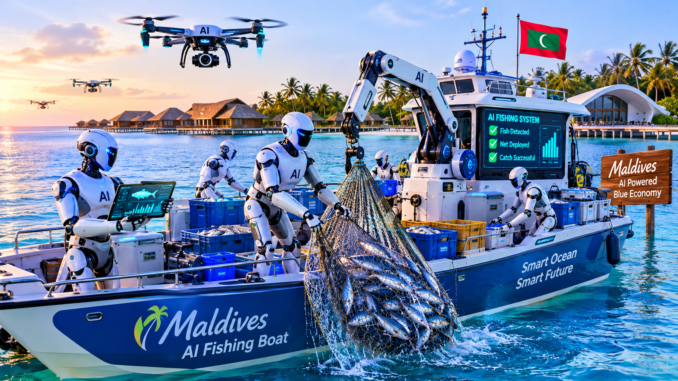
Artificial Intelligence is moving beyond software, computers, and digital assistants into the physical world. This new evolution, known as Physical AI, combines artificial intelligence with robotics, sensors, autonomous machines, and intelligent systems that can understand, interact with, and perform tasks in the real world.
Imagine a fishing boat in the Maldives operated with the support of AI-powered robots. Drones monitor the surrounding ocean, intelligent systems analyse water conditions and identify potential fishing locations, autonomous navigation assists the vessel, and robotic workers help deploy nets, sort fish, and manage the catch. All these technologies communicate through a connected AI system, making fishing operations smarter, safer, and more efficient.
For a country like the Maldives, where the ocean is central to its economy and heritage, Physical AI could open an entirely new chapter. It is an opportunity to modernise traditional fishing, improve productivity, attract technology investment, and develop a smarter blue economy while protecting marine resources.
The future of AI is not just about machines that can think and communicate. It is about machines that can move, work, and interact with the physical world.
We are moving from Artificial Intelligence to Physical Intelligence — and the next industrial revolution may begin right in our oceans.